
Politics
PRES. MACRON FACES A MIDDLE EAST AIRLIFT TEST HOTLINES CHARTER FLIGHTS
AS5,000 FRENCH CITIZENS ASK TO COME HOME
French citizen rapatriated form UAE to France (Source: France 24 TV)
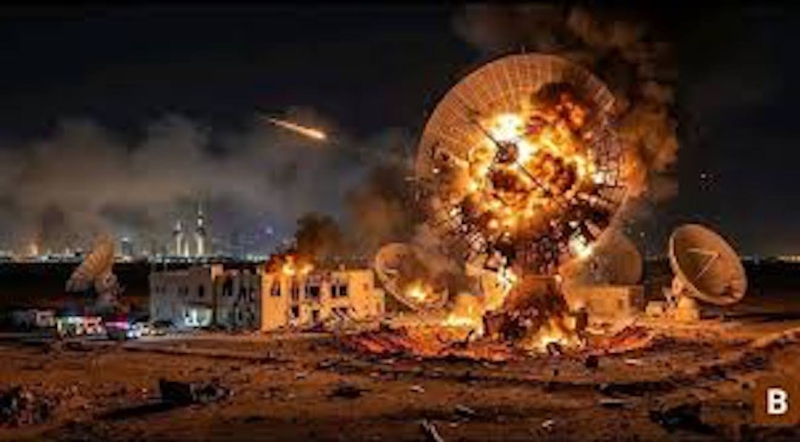
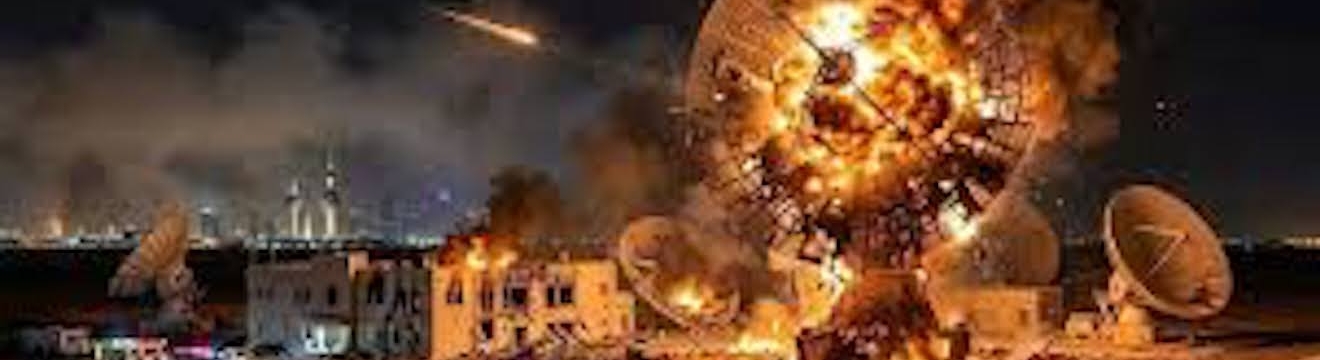
Iran War Strikes
(Source: Facebook)
(Source: Facebook)
Most of the roughly 4,000 French nationals based in the UAE spent 3 March trying to hold on to normal life, still commuting to work and keeping their children in school rather than rushing to the airport. In his address the following day, President Emmanuel Macron confirmed that France was now moving from contingency planning to actual repatriation flights from the Gulf, starting with the most vulnerable citizens and those most exposed to the closure of regional airspace. He reminded viewers that around 400,000 French nationals live, work or travel across the wider Middle East, and framed the evacuations as both a duty of protection toward these communities and a direct consequence of the new US–Israel–Iran war spilling over into Gulf states. This is an editorial geopolitical analysis, not an on the ground report, based on official statements and the author’s own experience as a Paris based correspondent watching this crisis unfold almost in real time.
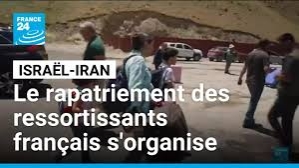
French Citizen repatriated from UAE to France
Source: Tv Caption France 24
Source: Tv Caption France 24
4,000 IN THE UAE AND 400,000 FRENCH CITIZENS LIVE IN THE WIDER MIDDLE EAST AS THE WAR SPREADS
President Macron’s government is now treating the Middle East airspace shutdown as a full scale consular crisis, with the foreign ministry’s crisis unit pushing out SMS alerts that include hotline numbers for French embassies and consulates in the UAE, Qatar, Kuwait and other Gulf states. Messages to registered citizens remind them of basic shelter instructions, warn against fraudulent “evacuation offers” and direct them to call the consular call centre in Abu Dhabi or the crisis centre in Paris before making any move. (Source: french Ministry of Foreign Affairs)
President Macron’s government is now treating the Middle East airspace shutdown as a full scale consular crisis, with the foreign ministry’s crisis unit pushing out SMS alerts that include hotline numbers for French embassies and consulates in the UAE, Qatar, Kuwait and other Gulf states. Messages to registered citizens remind them of basic shelter instructions, warn against fraudulent “evacuation offers” and direct them to call the consular call centre in Abu Dhabi or the crisis centre in Paris before making any move. (Source: french Ministry of Foreign Affairs)
In television interviews, Foreign Minister Jean Noel Barrot (France TV Prime) has stressed that roughly 400,000 French nationals live, work or travel across the wider Middle East and that the first priority is to get the most vulnerable out, while Defence Minister Catherine Vautrin (Tf1 TV Prime) repeats that the armed forces are “mobilised to support repatriation operations” and to protect French assets in the region. French media have also highlighted the anxiety of a visible group of French social media influencers and entrepreneurs who had relocated to low tax Gulf states in recent years and are now urgently seeking a way back to France as the conflict closes in on the region’s main hubs. (Source: France TV, TF1 TV)
FACILITATING EVACUATIONS, NOT ENTERING THE WAR”, SAID FOREIGN MINISTER JEAN NOËL BARROT
French foreign minister Jean Noel Barrot has been careful on television to frame France’s role as both protective and strictly defensive. On France 2 and TF1, the French MFA Barrot, repeats that Paris is “facilitating the evacuation of our most vulnerable nationals from the Middle East” and that “around 400,000 French citizens are currently present in the dozen countries affected by this conflict,” urging those who are only transiting through the region to leave while commercial routes remain open. In the same interviews, he stresses that France has “already responded to the request of our partners, in particular the United Arab Emirates, with Rafale aircraft, air defence systems and airborne radar capabilities all with a simple focus which is strictly defensive: to enable our friends and partners to defend themselves against this aggression, which they did not ask for,” and warns that Paris favours “de escalation” because wars launched outside international law and without clear aims “carry enormous risks for our compatriots, our interests and our partners.”
French foreign minister Jean Noel Barrot has been careful on television to frame France’s role as both protective and strictly defensive. On France 2 and TF1, the French MFA Barrot, repeats that Paris is “facilitating the evacuation of our most vulnerable nationals from the Middle East” and that “around 400,000 French citizens are currently present in the dozen countries affected by this conflict,” urging those who are only transiting through the region to leave while commercial routes remain open. In the same interviews, he stresses that France has “already responded to the request of our partners, in particular the United Arab Emirates, with Rafale aircraft, air defence systems and airborne radar capabilities all with a simple focus which is strictly defensive: to enable our friends and partners to defend themselves against this aggression, which they did not ask for,” and warns that Paris favours “de escalation” because wars launched outside international law and without clear aims “carry enormous risks for our compatriots, our interests and our partners.”
By 5 March, more than 5,000 French nationals had contacted the authorities to request repatriation as commercial flights across the region were grounded, and the first government chartered Air France rotations had begun operating from Gulf hubs towards Paris. One of those flights, commissioned to bring French citizens home from the UAE, had to turn back to France after take off because missile activity was reported in the area, a reminder, as Transport Minister Philippe Tabarot put it, of “the volatility in the region and the complexity of repatriation operations.” (Source Tf1 TV Tv)
By 5 March, more than 5,000 French nationals had contacted the authorities to request repatriation as commercial flights across the region were grounded, and the first government chartered Air France rotations had begun operating from Gulf hubs towards Paris. One of those flights, commissioned to bring French citizens home from the UAE, had to turn back to France after take off because missile activity was reported in the area, a reminder, as Transport Minister Philippe Tabarot put it, of “the volatility in the region and the complexity of repatriation operations.” (Source Tf1 TV Tv)
“MORE PLANES WILL TAKE OFF TODAY” SAID FRENCH DEFENCE MINISTER CATHERINE VAUTRIN
French Defence and Army minister Catherine Vautrin has echoed that message while putting the emphasis on repatriations. On French radio and television, she describes the situation as “very tense” and promises that “more planes will take off today” to evacuate French nationals stranded in the Middle East, particularly from the United Arab Emirates, as military assets like the carrier Charles de Gaulle and additional Rafale jets are deployed to secure airspace and maritime routes. She insists that “France is mobilised to protect its nationals, secure its facilities and support the countries with which it has defence agreements,” while underlining that “we are talking about negotiation and the end of the fighting, not about sending ground troops,” a formulation designed to reassure viewers that France is reinforcing its defensive posture without entering the war as a direct belligerent. .” (Source Tf1 TV Tv). To be continued
French Defence and Army minister Catherine Vautrin has echoed that message while putting the emphasis on repatriations. On French radio and television, she describes the situation as “very tense” and promises that “more planes will take off today” to evacuate French nationals stranded in the Middle East, particularly from the United Arab Emirates, as military assets like the carrier Charles de Gaulle and additional Rafale jets are deployed to secure airspace and maritime routes. She insists that “France is mobilised to protect its nationals, secure its facilities and support the countries with which it has defence agreements,” while underlining that “we are talking about negotiation and the end of the fighting, not about sending ground troops,” a formulation designed to reassure viewers that France is reinforcing its defensive posture without entering the war as a direct belligerent. .” (Source Tf1 TV Tv). To be continued
Liability for this article lies with the author, who also holds the copyright. Editorial content from USPA may be quoted on other websites as long as the quote comprises no more than 5% of the entire text, is marked as such and the source is named (via hyperlink).