
Politics
THE MATH STILL FAVOURS BRICS G7 SHARES FALL BELOW 30% OF WORLD GDP
DESPITE TRUMP’S IRAN SUPER DEAL
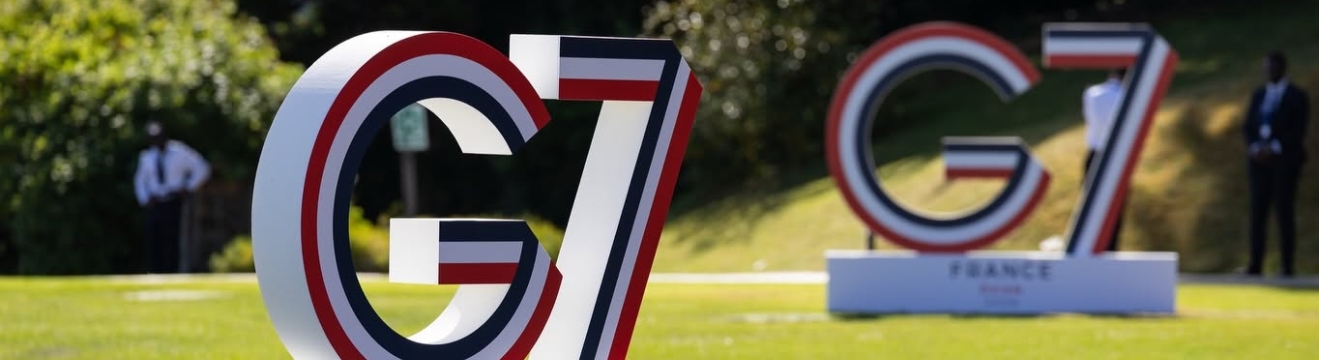
G7, Evian, France 2026 logo (Source: G7 France 2026)
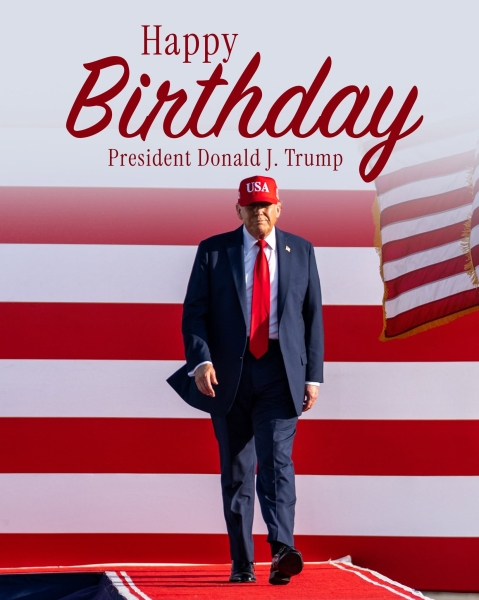
POTUS Trump 80's Birthday, 14 June 2026
(Source: The White House Courtesy)
(Source: The White House Courtesy)
“LET THE OIL FLOW” PRES. TRUMP SAID: A G7 BORN IN 1975 FACES A NEW ORDER HORMUZ REOPENS, MARKETS RALLY, BUT MULTILATERALISM LOOKS TIRED
Ships of the World, start your engines. Let the oil flow!” After more than one hundred days (108 days) of war and tension, and forty days of failed attempts to reopen this strategic chokepoint, the protocol of a peace accord is finally on the table, with a formal signing expected in Geneva on 19 June.
On the other hand, the arithmetic of global power was quietly shifting: for the first time, the BRICS bloc now accounts for a larger share of world GDP than the G7, and its growth rate is almost twice as fast. In Evian, the old club of Western powers looked less like a steering committee for the world and more like one player among others.
Ships of the World, start your engines. Let the oil flow!” After more than one hundred days (108 days) of war and tension, and forty days of failed attempts to reopen this strategic chokepoint, the protocol of a peace accord is finally on the table, with a formal signing expected in Geneva on 19 June.
On the other hand, the arithmetic of global power was quietly shifting: for the first time, the BRICS bloc now accounts for a larger share of world GDP than the G7, and its growth rate is almost twice as fast. In Evian, the old club of Western powers looked less like a steering committee for the world and more like one player among others.
BETWEEN A REOPENED STRAIT AND A CLOSING ERA
Indeed There is a déjà?vu is unsettling. The G7 Summit was created in 1975 by French president Valéry Giscard d’Estaing in response to the first oil shock; half a century later, the world is once again living through an oil shock triggered by the closure of the Strait of Hormuz, which paralysed global trade on this narrow corridor, forced the cancellation of some 19,000 flights and even pushed a number of low?cost airlines towards bankruptcy. Yet the economic landscape around this new crisis is no longer the same. For the first time, the BRICS bloc now accounts for a larger share of world GDP than the G7, and its growth rate is almost twice as fast. In Evian, the old club of Western powers looks less like a steering committee for the world and more like one player among others. The only real continuity with 1975 lies in the oil shock itself; the multilateral architecture that was born then is, in many ways, showing the early signs of an ending.
Indeed There is a déjà?vu is unsettling. The G7 Summit was created in 1975 by French president Valéry Giscard d’Estaing in response to the first oil shock; half a century later, the world is once again living through an oil shock triggered by the closure of the Strait of Hormuz, which paralysed global trade on this narrow corridor, forced the cancellation of some 19,000 flights and even pushed a number of low?cost airlines towards bankruptcy. Yet the economic landscape around this new crisis is no longer the same. For the first time, the BRICS bloc now accounts for a larger share of world GDP than the G7, and its growth rate is almost twice as fast. In Evian, the old club of Western powers looks less like a steering committee for the world and more like one player among others. The only real continuity with 1975 lies in the oil shock itself; the multilateral architecture that was born then is, in many ways, showing the early signs of an ending.
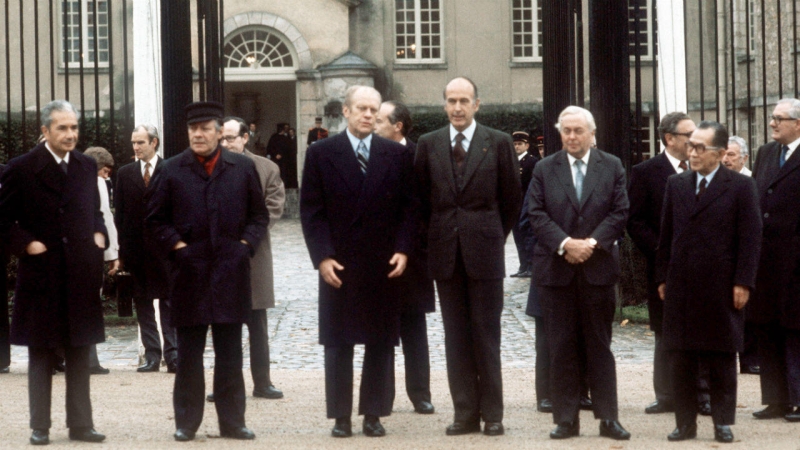
G7 in 1975, founded by President Giscard Destaing
Source: wikimedia
Source: wikimedia
FROM GISCARD’s G7 TO TRUMP’S HORMUZ SUPER DEAL
HOW A NEW OIL SHOCK EXPOSES THE LIMITS OF WESTERN?LED MULTILATERALISM
From an economic perspective, the contrast is stark. The G7, created in 1975 at French initiative under President Valery Giscard d’Estaing, once represented around two?thirds of global GDP. Today, its share has fallen to roughly 30%, while the BRICS and their expanded format (BRICS+) contribute around 31.5% of global GDP and more than 50% of world growth over the past decade. In purchasing power parity, the gap is even clearer: BRICS countries account for about 40% of global output, while the G7 has slipped below 29%. The G7 still produces more in absolute terms, but the dynamics have reversed.
HOW A NEW OIL SHOCK EXPOSES THE LIMITS OF WESTERN?LED MULTILATERALISM
From an economic perspective, the contrast is stark. The G7, created in 1975 at French initiative under President Valery Giscard d’Estaing, once represented around two?thirds of global GDP. Today, its share has fallen to roughly 30%, while the BRICS and their expanded format (BRICS+) contribute around 31.5% of global GDP and more than 50% of world growth over the past decade. In purchasing power parity, the gap is even clearer: BRICS countries account for about 40% of global output, while the G7 has slipped below 29%. The G7 still produces more in absolute terms, but the dynamics have reversed.
The average real growth rate of BRICS+ is estimated at around 4.2%, compared with only 1.7% for the G7. For a forum that once embodied the “centre” of the global economy, this is not a mere statistic it is an existential warning.
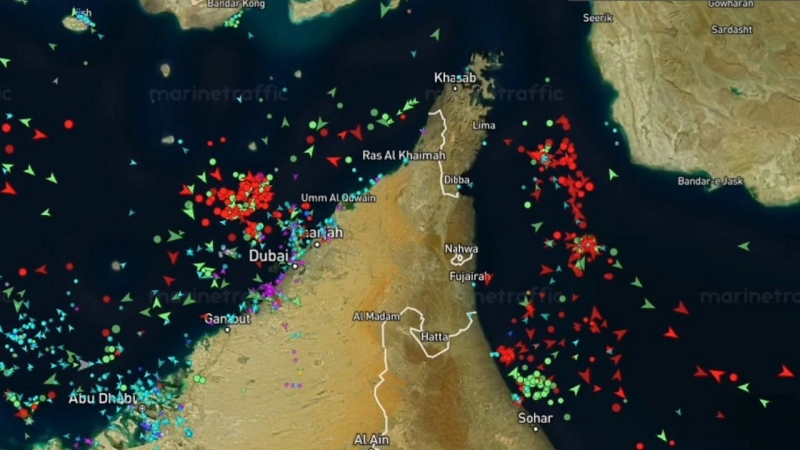
Hormutz Strait Closed, Aerial View
Source: facebook
Source: facebook
Brics-logo
Source: wikimedia
Source: wikimedia
THE END OF AN ORDER, NOT JUST A CRISIS
This shift matters for the Iran file as well. The agreement Donald Trump brought to Evian negotiated with mediation from Pakistan and Qatar, and presented as the basis for reopening Hormuz and neutralizing Iran’s nuclear program, will only be sustainable if it is accepted, or at least tolerated, by powers outside the G7 orbit: China, India, Russia, the Gulf monarchies. While POTUS Trump insists that the United States and Israel “saved Israel from a nuclear threat” and forced Iran to bury its program underground since 2025, the reality is that enforcement in today’s world cannot rely on Western pressure alone. The same logic applies to oil markets: reopening Hormuz may have pushed the barrel back down towards 82 dollars, but future stability will depend on coordination with producers and consumers well beyond the G7 table.
This shift matters for the Iran file as well. The agreement Donald Trump brought to Evian negotiated with mediation from Pakistan and Qatar, and presented as the basis for reopening Hormuz and neutralizing Iran’s nuclear program, will only be sustainable if it is accepted, or at least tolerated, by powers outside the G7 orbit: China, India, Russia, the Gulf monarchies. While POTUS Trump insists that the United States and Israel “saved Israel from a nuclear threat” and forced Iran to bury its program underground since 2025, the reality is that enforcement in today’s world cannot rely on Western pressure alone. The same logic applies to oil markets: reopening Hormuz may have pushed the barrel back down towards 82 dollars, but future stability will depend on coordination with producers and consumers well beyond the G7 table.
A.I AS THE NEW FRONTIER OF SOVEREIGNTY
Artificial intelligence adds another layer. In Evian, AI was officially framed as a sovereignty issue, with commitments such as SoftBank’s 75?billion?euro plan for AI data centres in France, and discussions about infrastructure, standards and regulation. Yet the deeper question remains: can a club that now represents less than a third of global GDP set the rules for technologies that will shape the entire planet? When BRICS countries already account for a larger share of world output and invest heavily in their own AI ecosystems, any attempt to impose purely “G7 rules” risks being perceived as another form of Western exceptionalism.
Artificial intelligence adds another layer. In Evian, AI was officially framed as a sovereignty issue, with commitments such as SoftBank’s 75?billion?euro plan for AI data centres in France, and discussions about infrastructure, standards and regulation. Yet the deeper question remains: can a club that now represents less than a third of global GDP set the rules for technologies that will shape the entire planet? When BRICS countries already account for a larger share of world output and invest heavily in their own AI ecosystems, any attempt to impose purely “G7 rules” risks being perceived as another form of Western exceptionalism.
DATA CENTRES, NUCLEAR POWER AND A NEW INDUSTRIAL MAP
For France, this G7 Summit had a double meaning. It was the high point of Emmanuel Macron’s second and final term, which ends in 2027; and it unfolded just days before VivaTech is kicking off, from 17th to 20th June in Paris, where the same themes AI, digital sovereignty, green industry , were debated in a more open, less protocol?driven environment. Between the lake and the exhibition halls, one conclusion emerges: the multilateral order built around a small club of Western powers is losing its capacity to embody the world. The economy, the demographics and the innovation pipelines are already elsewhere.
The question is no longer whether the G7 will remain the “director” of globalization, it is already not. The real question is whether it can reinvent itself as one platform among others, capable of speaking with, rather than for, the rest of the world. In Evian, the numbers suggested that time is running short.
ALIGNMENT WITH UNIVERSAL VALUSE OF DISABILITY/INCLUSION
USPA is a press agency committed to diversity, inclusion and equal opportunity in newsrooms and in the field. The agency actively supports journalists and contributors with disabilities and considers their perspectives essential to a fair and accurate understanding of the world. In line with the values of the United Nations and the broader American tradition of civil rights and equal access, USPA strives to ensure that its reporting reflects the voices, experiences and dignity of all communities, including people living with visible or invisible disabilities. Assignments, editorial choices and partnerships are designed to respect human rights, promote non?discrimination and encourage the full participation of every reporter, regardless of gender, origin, belief or physical condition.
USPA’s commitment to inclusive journalism is not only a legal or ethical requirement; it is a professional standard. We believe that news produced by diverse and accessible teams is more accurate, more nuanced and more faithful to the complexity of the societies we cover.
USPA is a press agency committed to diversity, inclusion and equal opportunity in newsrooms and in the field. The agency actively supports journalists and contributors with disabilities and considers their perspectives essential to a fair and accurate understanding of the world. In line with the values of the United Nations and the broader American tradition of civil rights and equal access, USPA strives to ensure that its reporting reflects the voices, experiences and dignity of all communities, including people living with visible or invisible disabilities. Assignments, editorial choices and partnerships are designed to respect human rights, promote non?discrimination and encourage the full participation of every reporter, regardless of gender, origin, belief or physical condition.
USPA’s commitment to inclusive journalism is not only a legal or ethical requirement; it is a professional standard. We believe that news produced by diverse and accessible teams is more accurate, more nuanced and more faithful to the complexity of the societies we cover.
Liability for this article lies with the author, who also holds the copyright. Editorial content from USPA may be quoted on other websites as long as the quote comprises no more than 5% of the entire text, is marked as such and the source is named (via hyperlink).