
Politics
FROM PARIS TO REGIONS PRES MACRON MOBILISES FRENCH DIPLOMACY AMID GLOBAL CRISIS
DIPLO NATION IN MOTION
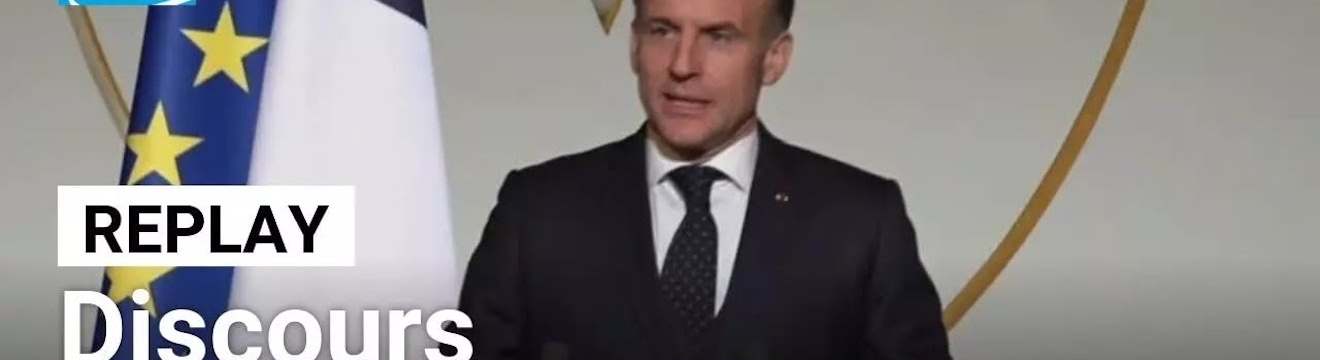
President Macron held 31st Ambassadors's conferenc (Source: France 24 Tv caption)
French MFA Logo
(Source: French Government)
(Source: French Government)
THE 31ST AMBASSADOR’S CONFERENCE & FRANCE GLOBAL STRATEGY AS MULTILATERALISM IS AT STAKE
President Macron used the 31st Conference of Ambassadors in Paris on 8 January 2026 to warn that “we are evolving in a world of great powers with a real temptation to carve up the world,” denouncing “new imperialism” and “neo colonialism” that threaten international law and multilateralism. Addressing French ambassadors at the Elysée and Quai d’Orsay, he linked France’s 2026 foreign policy priorities negotiating a global plastics treaty, steering the G7 presidency, and protecting European economic interests to a rapidly shifting geopolitical landscape marked by Russia’s war in Ukraine, the ongoing conflict in Gaza, and a deepening crisis in Venezuela. In this context, President Macron portrayed French diplomacy as a long term instrument of balance and sovereignty, rooted in a tradition that stretches from the great congresses of the 19th century to the creation of the League of Nations in 1919 and the founding of the United Nations and the European Coal and Steel Community after 1945, all arenas where France played a structuring role.
President Macron used the 31st Conference of Ambassadors in Paris on 8 January 2026 to warn that “we are evolving in a world of great powers with a real temptation to carve up the world,” denouncing “new imperialism” and “neo colonialism” that threaten international law and multilateralism. Addressing French ambassadors at the Elysée and Quai d’Orsay, he linked France’s 2026 foreign policy priorities negotiating a global plastics treaty, steering the G7 presidency, and protecting European economic interests to a rapidly shifting geopolitical landscape marked by Russia’s war in Ukraine, the ongoing conflict in Gaza, and a deepening crisis in Venezuela. In this context, President Macron portrayed French diplomacy as a long term instrument of balance and sovereignty, rooted in a tradition that stretches from the great congresses of the 19th century to the creation of the League of Nations in 1919 and the founding of the United Nations and the European Coal and Steel Community after 1945, all arenas where France played a structuring role.
Today, that tradition is backed by one of the world’s largest diplomatic networks ranked third globally with around 163 embassies and 16 permanent missions giving France an almost worldwide presence through embassies, consulates and cultural or consular antennas on every continent.
A TRADITION OF GLOBAL DIPLOMACY IN A FRACTURED WORLD
President Macron’s 31st address to ambassadors continued a practice institutionalised in 1993, when France created an annual conference bringing together all heads of mission to set strategic priorities for the year. In 2026, he framed this tradition against what he called the “brutalisation” of international relations and the return of the “law of the strongest,” pointing explicitly to large powers that disregard international rules
President Macron’s 31st address to ambassadors continued a practice institutionalised in 1993, when France created an annual conference bringing together all heads of mission to set strategic priorities for the year. In 2026, he framed this tradition against what he called the “brutalisation” of international relations and the return of the “law of the strongest,” pointing explicitly to large powers that disregard international rules
French diplomacy has repeatedly shaped global order: the Congress of Vienna in 1815, which re organised Europe after the Napoleonic Wars; the Congress of Paris in 1856, which settled aspects of the Crimean War; the 1919 Paris Peace Conference and League of Nations project; and France’s central role in the creation of the United Nations and early European integration in the late 1940s and 1950s. Macron invoked this historical capital to justify France’s current agenda: pushing for a binding plastics treaty by 2026, using the G7 presidency to defend climate and economic stability, and reinforcing a rules based system challenged by Russia’s invasion of Ukraine and by regional wars that risk spreading instability beyond Europe and the Middle East
The 2026 conference also unfolded as the Venezuelan crisis took a dramatic turn, with Donald Trump announcing a U.S. operation that captured Nicolás Maduro and his wife on drug trafficking charges, followed by their arraignment in a U.S. federal court. In parallel, Trump reiterated his long standing ambition to “take over Greenland,” arguing in an interview that “we do need Greenland, absolutely. We need it for defense,” illustrating the type of strategic competition over Arctic territories and critical minerals that Macron associates with a resurgence of imperial logic. Against this backdrop, France’s extensive diplomatic network, 163 embassies and multiple consulates and permanent missions remains a structural tool for influence and crisis management, allowing Paris to maintain political, economic, cultural, and security dialogues with the vast majority of UN member states.
Their mission was twofold: first, to explain the concrete work of French diplomacy ranging from crisis response and European policy to climate negotiations, economic promotion and the fight against disinformation to students, local officials, businesses and civil society organisations. Second, to listen to territorial expectations and difficulties, while showcasing diplomatic careers to younger generations through conferences, round tables and site visits organised with prefectures, universities and local partners. Public information hints at a wide territorial spread across large academic and economic hubs, but detailed lists of which ambassador visited which region are mostly found in local press releases and social media posts from France Diplomatie, regional prefectures and universities, making systematic documentation dependent on targeted searches at the local level.
WHY DIPLOMACY MATTERS THAN EVER ESPECIALLY THE FRENCH
In closing his address, President Macron called on the French ambassadors not to “give up” on multilateral negotiations, using the plastics treaty as a symbol of how collective rules can still be forged despite mounting rivalry among great powers. The continuity of the three years Russia’s war against Ukraine, the worsening situation in Gaza, reaching out extreme levels of violence and lack of humanity, the very early DEA’s arrest of Nicolas Maduro leader of Venezuela by POTUS, Trump’s administration U.S. power in and highly strategic claims over territories like Greenland underscores his message that the world is entering an era of powerful and tough competition where multilateralism is about to be questioned and the UN’s charter of sovereignty’s respect.
In closing his address, President Macron called on the French ambassadors not to “give up” on multilateral negotiations, using the plastics treaty as a symbol of how collective rules can still be forged despite mounting rivalry among great powers. The continuity of the three years Russia’s war against Ukraine, the worsening situation in Gaza, reaching out extreme levels of violence and lack of humanity, the very early DEA’s arrest of Nicolas Maduro leader of Venezuela by POTUS, Trump’s administration U.S. power in and highly strategic claims over territories like Greenland underscores his message that the world is entering an era of powerful and tough competition where multilateralism is about to be questioned and the UN’s charter of sovereignty’s respect.
France’s response, as outlined on 8 January 2026, is to lean on its historical diplomatic tradition, its dense network of embassies and consulates, and a combination of Paris based strategic reflection with nationwide outreach embodied by initiatives such as “Diplo Nation.” In this sense, the 31st Conference of Ambassadors and the parallel tour of 11 ambassadors across French regions (there are 13 regions in France) illustrates a conviction at the heart of French foreign policy: that in a moment of geopolitical turbulence, diplomacy is not an optional accessory but an essential tool for preventing conflicts, managing transitions of power, and preserving a multipolar order grounded in law rather than force.../ Sources: french Diplomacy, Embassy in Kuwait, Europe1 Radio, France Tv
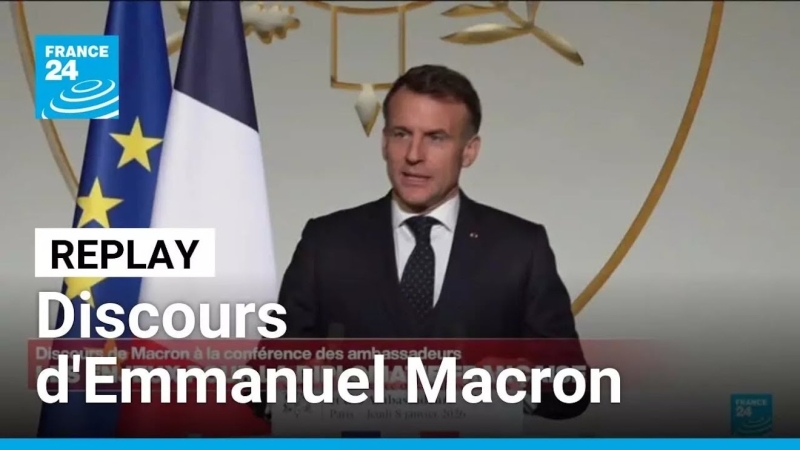
President Macron held 31st Ambassador conference, Elysee
Source: France 24 Tv caption
Source: France 24 Tv caption
“DIPLO NATION”: AMBASSADORS ACROSS FRANCE
Complementing the Paris conference, eleven French ambassadors fanned out across metropolitan France on Tuesday 6 January 2026 as part of the “Diplo Nation” regional outreach programme. These visits, coordinated with the Ministry for Europe and Foreign Affairs, aimed to “go to meet French citizens” in major regions and metropolitan areas, echoing previous operations that sent ambassadors to cities such as Marseille, Rennes or Rouen for public debates and university encounters
Complementing the Paris conference, eleven French ambassadors fanned out across metropolitan France on Tuesday 6 January 2026 as part of the “Diplo Nation” regional outreach programme. These visits, coordinated with the Ministry for Europe and Foreign Affairs, aimed to “go to meet French citizens” in major regions and metropolitan areas, echoing previous operations that sent ambassadors to cities such as Marseille, Rennes or Rouen for public debates and university encounters
Liability for this article lies with the author, who also holds the copyright. Editorial content from USPA may be quoted on other websites as long as the quote comprises no more than 5% of the entire text, is marked as such and the source is named (via hyperlink).