
News
The Roar of an Ancient Nation: Confronting Despotism
Khamenei the Brink of Collapse?
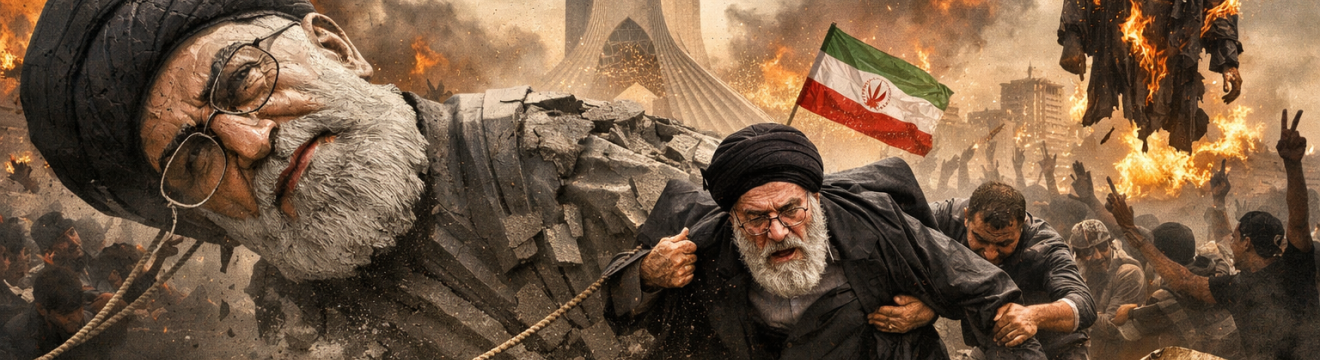
This is end… (Source: Saman Hajibabaei)
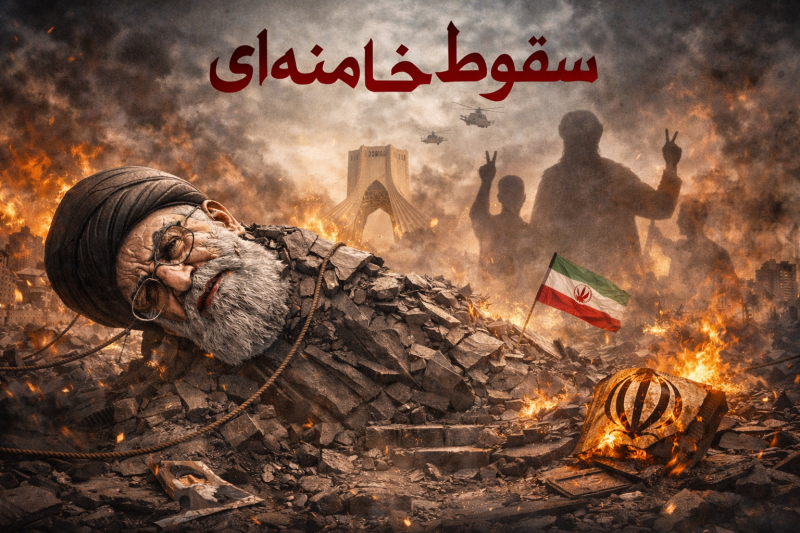
Dictator
(Source: Saman Hajibabae )
(Source: Saman Hajibabae )
As the world steps into a new year marked by uncertainty, Iran stands at the epicenter of a profound seismic upheaval. Streets once subdued by fear and silence now tremble with the roar of a population demanding an end to decades of repression. What began as scattered strikes in response to economic devastation has evolved into a nationwide crisis—one that, according to reports, has engulfed more than 200 cities across all 31 provinces.
This is not a fleeting eruption. It is a historic reckoning: the collective outcry of a nation that has endured years of sanctions, isolation, and structural decay. With at least 45 protesters reportedly killed and more than 2,200 arrested, the regime’s iron fist has tightened. Yet, at the same time, cracks have emerged—exposing deep vulnerabilities that could shake the very foundations of the Islamic Republic.
Based on verified reports, eyewitness accounts, and expert assessments up to the moment of the sweeping communications blackout on the evening of January 8, this in-depth analysis dissects the chaos, courage, and global implications of the uprising. The central question is unavoidable: can this spark ignite the downfall of one of the world’s most entrenched authoritarian regimes?
Reporting from Behind the Blackout
This report emerges from enforced silence. Since the evening of January 8, Iran has been plunged into a near-total communications blackout—the most extensive since the 2019 uprising. Domestic and international internet access, landlines, and even foreign SIM cards have been cut. Information seeps out through clandestine channels: smuggled videos, satellite connections such as Starlink, and exile-based media piecing together fragments of the truth.This digital iron curtain is no accident. It is a desperate gamble by a regime under siege—an attempt to blind both its citizens and the world. Yet, in darkness, reality often becomes sharper. The narrative that follows draws on corroborated data from human rights organizations, eyewitness testimony, and real-time reporting prior to the blackout. What emerges is not merely a story of protest, but one of human resilience in the face of systemic failure—carrying consequences that may reshape the Middle East and beyond.
A Nation Ignites: From Endurance to Explosive Will
Picture this: on a freezing January night in Tehran’s Golestan district, crowds swell into the thousands, chanting “Tehran is free!” as security forces retreat amid chaos. These scenes—captured in covert footage—distill the twelfth day of an uprising that some analysts describe as the most dangerous unrest since 1979.What began on December 29, 2025, with strikes in Tehran’s bazaar over soaring prices and a collapsing currency, has morphed into a full-scale revolt. From the Kurdish regions in the west—where reports suggest more than 50 cities shuttered shops in solidarity—to the religious stronghold of Qom, where murmurs of dissent are heard even among clerics, no area remains untouched.
Explosive geographic spread: Protests have been reported in Tehran, Mashhad, Isfahan, Shiraz, Rasht, Babol, Yazd, Kermanshah, and beyond—over 250 locations by some estimates. Villages have joined major urban centers, a rare convergence reminiscent of 1979, but this time moving in the opposite ideological direction.
Tactical escalation: Protesters erect barricades with trash bins and street signs, torch IRGC vehicles, and seize government buildings in cities such as Lordegan and Marvdasht. In Azna, a police station is reportedly set ablaze. There are accounts of rooftop gunfire in Tehran.
Symbolic defiance: Statues of regime figures are toppled; compulsory hijab is collectively discarded; and signs of underground religious and cultural activity resurface amid the turmoil.
This is a population that has crossed the threshold of endurance. Patience has given way to the conviction that survival itself requires confrontation. Just as the fall of the Berlin Wall or the defiance of Tiananmen Square etched themselves into history, January 8, 2026, may be remembered as the day endurance turned into revolution.
Symbolic defiance: Statues of regime figures are toppled; compulsory hijab is collectively discarded; and signs of underground religious and cultural activity resurface amid the turmoil.
This is a population that has crossed the threshold of endurance. Patience has given way to the conviction that survival itself requires confrontation. Just as the fall of the Berlin Wall or the defiance of Tiananmen Square etched themselves into history, January 8, 2026, may be remembered as the day endurance turned into revolution.
Beyond the Crowds: A Fractured Social Mosaic
Sheer numbers alone do not explain the depth of the fury. The uprising draws strength from across society: bazaar merchants—the backbone of the traditional economy—have closed shops in more than 15 cities; students have occupied universities; truck drivers and factory workers have disrupted logistics chains; even some clerics and reformists have voiced grievances. Women, recalling the Mahsa Amini movement of 2022, stand at the forefront, openly discarding compulsory hijab and challenging the theocracy’s moral authority. In Zahedan, long-standing Baluch grievances fuse with national outrage after Friday prayers.This convergence is not chaos; it is the calculated detonation of a collapsed social contract. As one analyst notes, “Every pillar of regime survival is cracking simultaneously: the economy, repression, and deterrence.” When mosques empty and secular flags rise, the regime’s ideological glue dissolves.
The Spark: Economic Catastrophe as Revolutionary Fuel
Call it an uprising of the hungry with dignity—people deprived not only of bread, but of respect. Iran’s economy is in freefall: since November 2025, the rial has lost more than 50 percent of its value, plunging to around 195,000 to the dollar; inflation exceeds 50 percent; power outages and water shortages cripple provinces; and the scars of a recent 12-day conflict with Israel have compounded sanctions pressure. While billions flow to proxy forces abroad, pensions evaporate in days.Immediate triggers: Official admissions of bankruptcy ignited bazaar strikes; public punishment of merchants further inflamed anger.
Human cost: Families queue for subsidized sugar; wages lose value overnight; corruption scandals erode what little trust remains.
Stopgap aid is widely viewed as an insult. What is demanded is the end of a system perceived as irredeemable. This economic bomb has armed a moral revolt.
Regime Retaliation: Naked Violence Amid the Struggle
The state’s response is a symphony of force: live ammunition, tear gas, grenades, rooftop snipers, and helicopter patrols. Security forces—reportedly reinforced by foreign militias—have intensified repression. Hospitals are raided to arrest the wounded; families are threatened; and the specter of a 2019-style massacre looms.Casualties: Between 36 and 45 protesters, including children, are reported killed; four security personnel have died; more than 2,200 have been arrested.
Intimidation tactics: The nationwide blackout disrupts coordination; foreign forces fill structural gaps.
Signs of strain: Reports of fatigue and disobedience within security ranks; indications that some elites are preparing exit strategies.
When coercion becomes the sole instrument of rule, legitimacy evaporates.
Internal Fault Lines: The Regime’s Ticking Bomb
Authoritarian systems often collapse from within. The IRGC is reportedly exhausted after recent conflicts; backing from Russia and China appears diminished; dissent simmers inside the apparatus. Elites weigh flight; in some areas, security forces reportedly applaud crowds. As one expert warns, “This is the moment—systems break from the inside.” Total repression has not yet materialized—out of restraint, or incapacity? The margin for error is vanishing.Reza Pahlavi: A Beacon of Unity in the Storm
Amid the turmoil, Reza Pahlavi has emerged not as a commander, but as a catalyst. From exile, his calls for mobilization on January 8 and 9 have resonated widely, with chants such as “Pahlavi returns” and “Long live the Shah” echoing in the streets. Advocating a secular democracy and a referendum, he represents for many a pre-1979 Iran—more unified, outward-looking, and aligned with the world. Not a would-be autocrat, but a facilitator capable of aligning disparate forces without imposing an ideology. In fragmented struggles, symbols can transform sparks into steel.Global Shockwaves: Why Iran’s Fury Echoes Worldwide
For readers in Frankfurt or Washington, this turmoil may seem distant—until it isn’t. A freer Iran could weaken regional proxy networks, stabilize energy markets, reduce migration pressures, and lower nuclear risks. U.S. warnings, European contingency planning for refugee flows, and China’s concern over energy disruption underscore the global stakes.Strategic implications: Regional balances may be redrawn; new risks and opportunities will emerge.
Moral imperative: This is a test of universal values—dignity and rights. Silence empowers repression; solidarity empowers change.
Imagine lower fuel costs, diminished global terrorism, and advances in human rights. Supporting freedom here strengthens it everywhere—gradually, but decisively.
Collapse or Carnage?
Will the edifice built by Khamenei fall? Some assessments point to rising odds of collapse; others warn of impending bloodshed. History shows that many uprisings fail without external support. If internal fractures widen, revolution is possible; if repression prevails, a massacre looms. Uncertainty itself fuels the fire—and history often turns on such edges.An Unfinished Symphony of Freedom
Why stay with this story? Because it mirrors vulnerabilities everywhere: economic strain, eroded trust, and the spark of dissent. The courage of people who face bullets for dignity reminds us that change begins with a single voice, a single act. When the blackout lifts, will the world look away—or amplify the echoes of those cries? In this shared human drama, empathy and support can be the quiet force that tips the balance toward a safer world—for Iran, and for all of us.This story does not end here. It continues with every reader who refuses to turn away.
Liability for this article lies with the author, who also holds the copyright. Editorial content from USPA may be quoted on other websites as long as the quote comprises no more than 5% of the entire text, is marked as such and the source is named (via hyperlink).