
News
The constitutional petition has been instituted against Federation of Pakistan
Construction of DAMS by INDIA
A (Source: Ak)
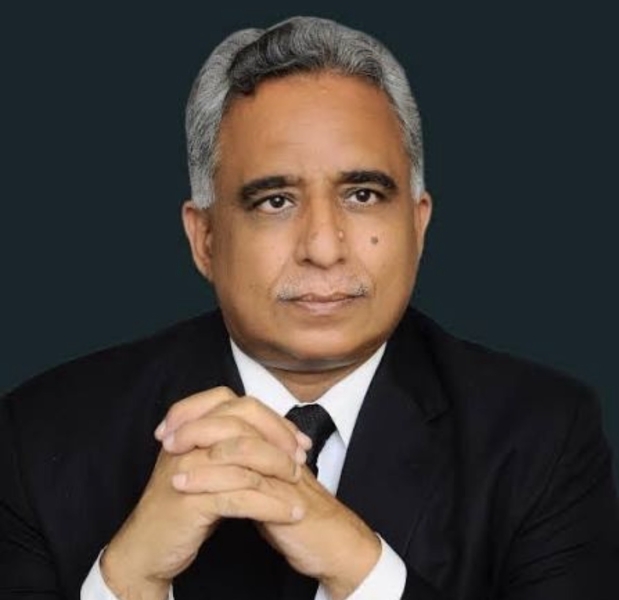
M. Azhar Siddique (Adv. Supreme Court Pakistan )
(Source: Ak)
(Source: Ak)
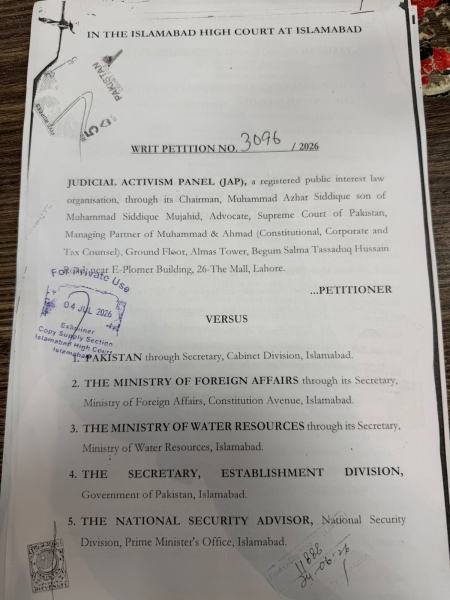
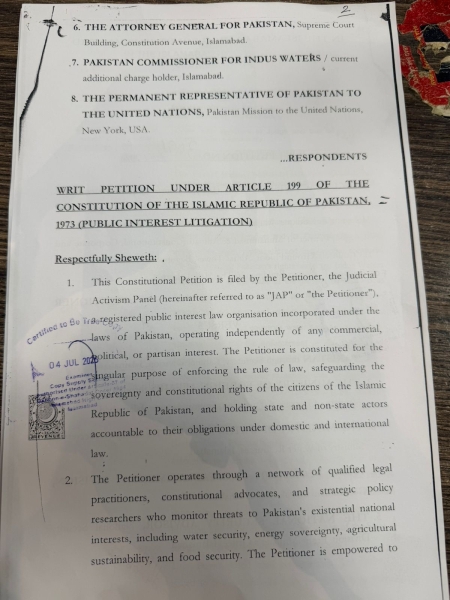
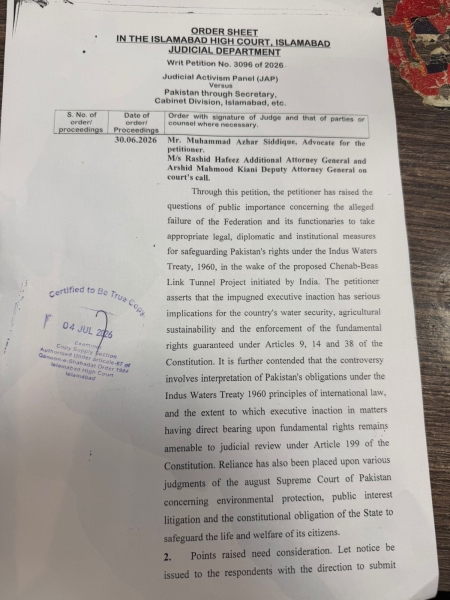
The Islamabad High Court has taken up for judicial consideration a significant constitutional petition filed by the Judicial Activism Panel (JAP) through its Chairman, Advocate Muhammad Azhar Siddique, under Article 199 of the Constitution, raising issues of exceptional public importance concerning Pakistan’s water security and the protection of national interests under the Indus Waters Treaty, 1960. The petition seeks enforcement of the State’s constitutional obligations to safeguard Pakistan’s sovereign water rights in view of India’s proposed Chenab-Beas Link Tunnel Project and the potential implications for the country’s water resources, agriculture, environment and food security.
The constitutional petition has been instituted against the Federation of Pakistan through the Cabinet Division, the Ministry of Foreign Affairs, the Ministry of Water Resources, the Establishment Division, the National Security Advisor,
the Attorney General for Pakistan, the Pakistan Commissioner for Indus Waters and Pakistan’s Permanent Representative to the United Nations. The petition contends that the relevant authorities have failed to adopt timely legal, diplomatic and institutional measures to protect Pakistan’s interests under international law and the Indus Waters Treaty.
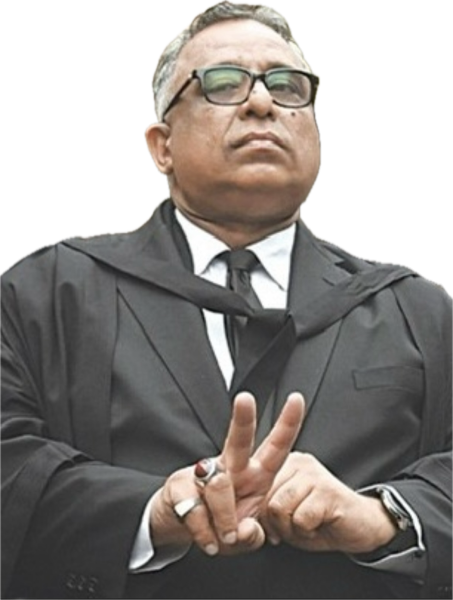
M.AZHAR Siddique ( Adv.Supreme Court Pakistan )
Source: Ak
Source: Ak
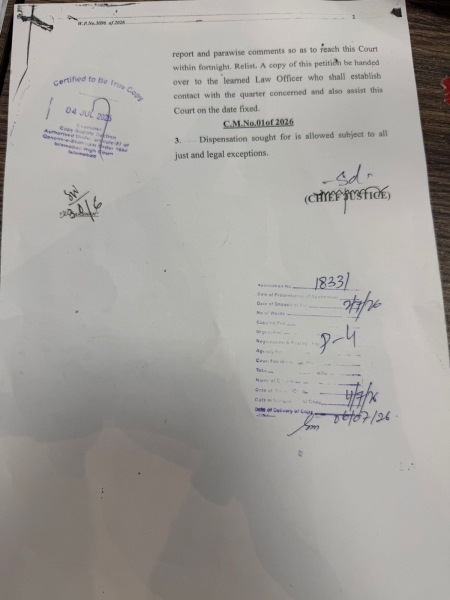
The Court further directed the learned Law Officer to coordinate with the concerned authorities and assist the Court on the next date of hearing. The accompanying civil miscellaneous application seeking exemption was also allowed, subject to all just and legal exceptions.
1
Source: Ak
Source: Ak
2
Source: Ak
Source: Ak
3
Source: Ak
Source: Ak
M.Azhar Siddique (Adv.Supreme Court Pakistan )
Source: Ak
Source: Ak
4
Source: Ak
Source: Ak

M.AZHAR Siddique (Adv.Supreme Court Pakistan )
Source: Ak
Source: Ak

Aurangzeb Akbar / Investigative Journalist London
Source: Ak
Source: Ak
more information: https://aurangzeb
Liability for this article lies with the author, who also holds the copyright. Editorial content from USPA may be quoted on other websites as long as the quote comprises no more than 5% of the entire text, is marked as such and the source is named (via hyperlink).